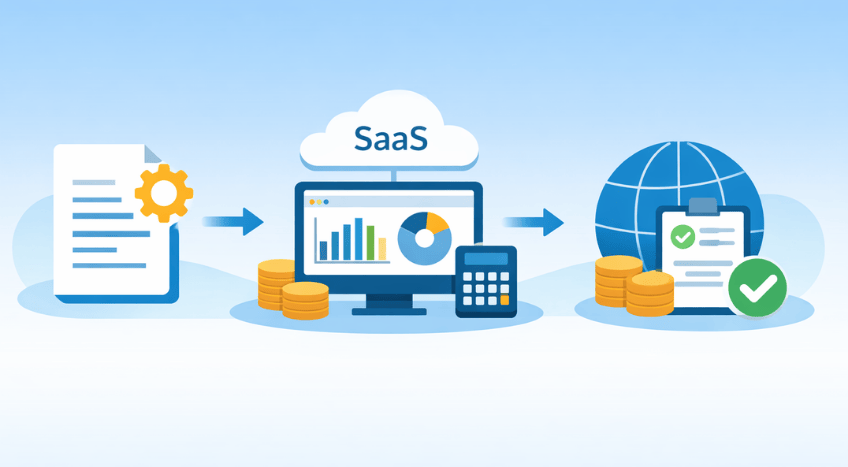
How to Calculate ROI of ERP Implementation for SMEs

For many MSME owners in India, the decision to implement Enterprise Resource Planning (ERP) software often stalls at a single, critical question: "Will I get my money's worth?"
While the operational benefits of automation are clear, the financial justification can be harder to pin down. You are not buying software; you are investing in a digital transformation that impacts every department, from inventory to accounting. Calculating the return on investment is crucial not only to justify the expense but to set clear expectations for what success looks like. Here is how you can accurately measure the ROI of implementing ERP software for your business.
Understanding the total cost of ownership (TCO)
Before you can calculate return, you must accurately define the investment. Many businesses make the mistake of counting only the license fees, but the true cost involves several components:
- Software costs: Perpetual license fees or monthly subscription charges.
- Hardware upgrades: Servers, networking gear, or new workstations are required to run the system (though cloud-based solutions reduce this).
- Implementation fees: Costs for consultancy, data migration from legacy systems, and system configuration.
- Training costs: The time and money spent upskilling your staff to use the new system effectively.
- Maintenance and support: Annual maintenance contracts (AMC) or support subscriptions.
Quantifying tangible benefits (Hard ROI)
Tangible benefits are those that directly impact your bottom line and are easiest to measure.
1. Inventory cost reduction
Excess inventory ties up working capital, while stockouts lead to lost sales. An ERP system provides real-time visibility into stock levels, allowing for Just-in-Time (JIT) ordering. If your current inventory holding cost is ₹50 Lakhs, and an ERP helps reduce stock holding by 20% through better forecasting, that is ₹10 Lakhs released back into cash flow.
2. Operational efficiency and labour savings
Manual data entry can lead to mistakes and consume valuable man-hours. By automating routine tasks like invoice generation, payroll processing, and reconciliation, your team can focus on revenue-generating activities. Calculate the hours saved per employee per week and multiply this by their hourly wage to see substantial annual savings.
3. Compliance and penalty avoidance
In the Indian tax landscape, non-compliance is expensive. Late GST filings or incorrect calculations can lead to heavy penalties and interest.
While a simple manual GST calculator might help with one-off calculations, it cannot handle bulk transactions or validate data against portal requirements. ERP software automates this, ensuring 100% accuracy in GST returns. The value of avoiding these penalties is a direct financial saving.